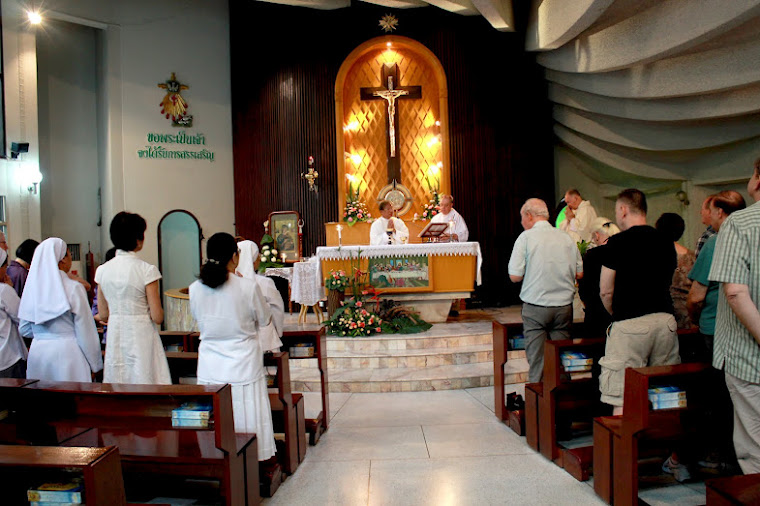
We gather

We gather
to give thanks for my 25 years.

Tuesday, May 26, 2020

It's the coming together, stupid.

We are social animals.  By nature, we simply want to come together.  Even as we make mistakes and suffer through our coming together, we keep coming back for more.  Coming together is in our DNA.

Religion is founded on human nature and taps into it.  Its very name defines "religion" as binding us together.  Assembly is at the core of being church.  Without assembly, how do we be church? 

Within the pandemic, during this era of the next normal, social interactions and relationships are not in question.  What is in question is how.  How do we meet as human beings?  How do we transact social interactions?   How do we gather?

As we enter the next normal, we are not just returnees rushing back to the herd.  Is what we had to be so treasured anyway?  Maybe we could do a better job at it.  Maybe there is need for some refinement.  Maybe we are at a crossroads where we have an opportunity to renegotiate the social contracts that keep us together and so seek new and more life giving ways for gathering. 

No matter what, we live life and we keep living it.  As part of that struggle to live life, we keep coming together.  To stay in isolation is like a slow suicide.  It goes against the grain of being human and will never last.  The question is do we come back together with a sense of awe and critical reflection?  Is simple gathering all there is?  Is this enough?  Is there a better way?  Can we not make new and more creative, life giving choices?

Underlying all, there are two basic tenets.
1)  Our world is truly fragile, as are we.
2)  God is in charge, not us.
When we lose sight of such fundamentals, we end up coming together in unknown and fearful ways, in arrogance and under the dishonest veneer of control.  There is no future for humanity in following such a path.

This next normal offers us a challenge to come together in new ways that follow good lessons learnt through this pandemic. Namely,
We are all interconnected. 
We all belong together in human solidarity.
We best look after each other.
We are responsible for each other. 

As we face another new beginning in our history in coming out from lockdown to gather again, we can choose to face our present with courage and respond in new and better ways to be together.  Such is a revolution being offered humanity in our times.   
First Sunday back at church in the Next Normal

Monday, May 18, 2020

Laudato Si Week

Sunday 24th May is the fifth anniversary of Pope Francis releasing his Encyclical Letter, Laudato Si, which deals with our common home, the earth.  For me, this encyclical is simply summarised as we care for each other and our earth, and, if we don't, we pay the price.

Accordingly, the week ahead has been named in the Church as Laudato Si Week, with the theme - Care for our common home. I was prepared for this but then along came a surprise letter from our archbishop, announcing that all church buildings would reopen next Sunday, also 24th May.  This reopening happens after two months of keeping churches closed due to Covid-19 and it opens up a whole new agenda for my week. 

Simply put, it is not just a proclamation to open up church doors.  This is about exiting Phase 1 of the pandemic and entering into what I hear named as the next normal.  One can no longer go back to what was and resume business as normal.  It is rather moving into the unknown of how to operate collectively as human beings together in this new age focused on heightened concern for public health and safety within a global pandemic.

This challenges us to paying attention to each other in ways we have not known.  This challenges us to show respect to each other in deeper ways, ways previously not considered.  I am not to act in public just to protect myself but more potently I act to protect others, doing so through rethinking everyday behaviours previously taken for granted.  All this because of a virus that could effect anyone and everyone without our ever knowing.

Social distancing is the cry of the time but it is about much more.  We are truly entering the next normal in human relations and gathering.  As I think of it for mass next Sunday, this is a huge ask.  We have to think through all our accepted social norms for gathering and reorganise so as to be able to gather without causing harm to each other, not even knowing if this is happening inadvertently.

This is but one simple setting that presents us a challenge for change, that demands new ways as we search to care for each other and take responsibility for each other in these extraordinary times.  Apply this to the planet and, Voila!  We have the way ahead.  Care and concern; respect and responsibility are the four key works for the next normal, for caring for our common home.

Roll on Laudato Si Week!  Roll on the next normal!

Priest being creative in giving the easter blessing to his people during the pandemic

Monday, May 11, 2020

It's the Suffering, Stupid!


8th May marked 75 years since the end of World War II in Europe.  That momentous date reminded me of a connection that I have with that time through a distant relative by marriage.  He is Damien Parer, a great Australian, being remembered as a gifted and committed photographer and journalist who had a passion and true gift for recording life at the front line. 

He did not just record war.  He captured it as a theatre which featured inhumanity and great suffering for the purpose of showing how humanity can grasp such intense suffering and rise through it to a new greatness.  Extraordinarily, in the one plot, one sees and is appalled by such human cruelty and indignity, while witnessing the raising up of humanity through the simple and brave acts of human kindness and compassion being so willingly and graciously offered among the same suffering actors. 

He himself became one of the many victims of that war, being killed in battle at the front line where he lived out his passion for his work and humanity. 

So Damien Parer shared his gift of facing human suffering and showing how humanity can in such ordinary ways go through it to share its true human message.  That message is that suffering does not define humanity but rather allows hunamity to define itself in the face of it.  He did not give the answers to then world problems nor did he stop or prevent a war.  Rather he showed the prupose found in suffering.  Simply, the human spirit does not have to be brought down by war, barbarism or suffering, but can meet it and rise above it to show the true strength and value of humanity.   

Can we we look through our present, shared suffering?  Can we go beyond the doubts, the pain, the hurt, the fears?  We can and, in doing so, we share the message of the time that needs to be shared for the sake of humanity. 

Do not be overcome.  Hope is real.  Grasp life for what it really is.  Live life in its fullness.  This is what we best grasp at this time of the pandemic and at all times.  It just is that a time like this in history pushes us to greatness, makes us realize this message more poignantly, kicks us out of our apathy.  Suffering is not the end.  It is part of the means to attaining the heights of humanity, and in such ordinary ways lived out by everyday men and women.  Suffering is redemptive.     


Tuesday, May 5, 2020

Ever an Ostrich

The government State of Emergency continues for another month.  In line with this, the archbishop of Bangkok has issued a letter decreeing that the practice of no public masses is to continue for the month of May.  Despite this, guess where they are still having public masses?  Yes, Holy Redeemer church.  I may be seen as revisiting past territory but I am not as I have moved beyond where I last was on this issue.

Given the extraordinary times we live in with all their opportunity for discovering creative ways, taking on new initiatives and achieving growth, it seems a waste for church to just keep repeating what is always done.  To only follow the same trodden path will only lead to our missing out on the richness to be found in these times that are not just extraordinary, but I am finding are also very much graced and freeing.  The message of the ostrich with its head stuck in the sand is that it never knows what is going on around it, missing out on what is wondrous, new and possible. 

For me, their having public mass truly no longer concerns me on the basis of their going against Church and civil advice on assemblies in the age of the virus nor about their lack of solidarity with the rest of the local Church. It is about what they are missing in these graced times and more importantly about what they are not allowing others to experience and enjoy in these times of graced opportunity for church and mission. 

These are freeing times for we can see reality more clearly for what it is; we can see more easily those around us for who they are.  So we no longer just assume that we will be directed by the other to do the good and right thing, but freed for discovering the creative and new ways to do the same into the future.  Pope Francis calls us as Church to look to creative ways to be Church, to live God's love.  This is freeing but freedom does not come easily.  Freedom involves struggle.

What we thought was permanent is now easily seen to be impermanent. The basic call of the gospel to transformation rings more true than ever before.  This is a time for an incredible journey.  Our heads stuck in the sand will never allow us to start that journey.  None of this is easy but the ways of adventure and risk are best followed to be authentic.

As an Orthodox theologian teaches:
"We know where the church is, but we don't know where she isn't."
How true.  How frightening. 
 

Wednesday, April 29, 2020

The Next Normal

A local initiative to help others during Covid-19
For a few years now, I ever read about the new normal and how it explains away all sorts of bizarre or just downright, bad behaviour.  I am sick of it.  I forever am saying that we cannot just accept the new normal and we have to stand up to it.  Now with this pandemic and one third of the world under lockdown, I am starting to hear of the next normal.

Well, I think - Yeah!!  This may be the chance to build up a world normal that is more humane, more understanding and more forgiving.  This is my hope. 

What I am seeing in the midst of this crisis is so much kindness arising from people's hearts.  This could be the basis for the next normal, being the sign of a better future. 

In the midst of tragedy and sadness for so many; in the midst of these extraordinary times, there are graced opportunities, opportunities for good.  I do suspect that this may be the crisis the world has needed to kick us out of our comfort zones and selfish ways, to kick us out of the new normal. 

Then I have to ask what is this term 'new normal' all about?   Who made up this term?  And why?   To determine social outcomes?  To support some powerful elite?  Life cannot be described by generalizations.  That is too easy.  Roll on the next normal and hope it better captures who humanity really is. 

Tuesday, April 21, 2020

Face the Challenges

"We used to wonder where war lived, what it was that made us so vile.  And no we realize that we know where it lives ... inside ourselves."
(Albert Camus)

I read this quote on Facebook last Friday and I thought - How true!  It gave me a big kick which I needed as I face issues of work and life in the midst of  a worldwide COVID-19 crisis within my little world here in my Bangkok.

I remember a text book that was in my resource tool kit for life 25 years ago, entitled "Feel the Fear and Do It Anyway".   That book provided me key learning for stepping out beyond my fears and so stop being the victim I was in life.  Then I read Timothy Radcliffe last week, sharing a powerful reminder that "those are courageous who fear and yet do what they should".  These two together act to empower me for facing today's world and its many challenges.  They tell me that we do not have to be ostriches but can be the creators of new ways for the needed transformation of life into the future.

It just takes courage which does not deny our fears but takes us beyond them.  Easy, no?

Tuesday, April 14, 2020

Don't be an Ostrich

Don't just bury yourself.  
Holy Redeemer is a centre for Catholic worship in Bangkok, run by the Redemptorists who are the most successful male clerical religious congregation in the country.   Successful?  Hmm!!!

The Brothers taught me at school that life was about being perfect, successful and in control. I long ago learnt that none of these worked.  They really did not define or help deal with life at all.  Instead these themes held me back for I have never been perfect, have been only somewhat successful at times and hardly ever in control.

Back to the Redemptorists.  They may be seen as successful but, in this crisis, they are showing  up all the dysfunctional life themes of control, perfection and success as the traps they are for us little, fragile human beings.  Yes, they may keep running the show as if nothing ever happened.  That may make them appear to be stronger and better in the church market place but what they are doing is acting destructively against good and healthy solidarity in church and society.  What is a key for life in this time of world crisis is that we all stand in solidarity and act responsibly.  This is so at anytime but is shown up to be more so true in a time of crisis. 

We cannot bury ourselves in our own mythology, our own story.  We are ever challenged to get out and be part of the wider story, the reality of humanity.  That is much more so at a time like this, a crisis that shows us up for who we truly are.  So a time like this challenges us to change, to find creative ways of life and love; not just sticking to the old, tired ways; not being driven to be perfect, strong and in control which will never happen.  Extraordinary times like today show us this so clearly.  Time to get out of the tomb.