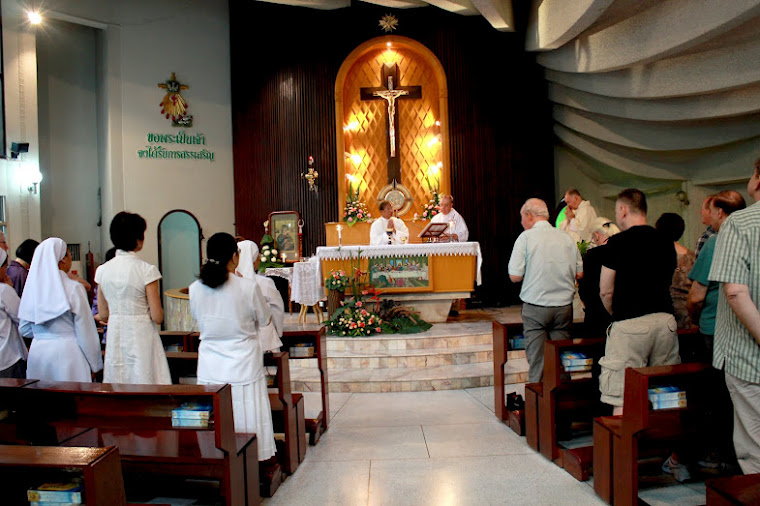
My previous entry, being a piece written originally for elsewhere, made me reminisce. As a result, I found this piece, I wrote for Pentecost, 2016. I share it as, while it comes from the pre-COVID-19 era, it so speaks of this time. Prophetic?
"Politics in
our world - USA, Brazil, Philippines, Venezuela (as I was reminded by a member
of today’s congregation), Iraq, Syria and so many other countries (too many to
list) - is a mess. We can no longer simply say that elections
are won by politicians who make the most promises or who have the best
policies, or who are the most brazen or the strongest or most brutish, or who
are the most corrupt offering the biggest prizes. Any assessment of election wins has to go
much deeper.
We lack
truly good leaders. Too often promises
are made but never met. This has been
going on for far too long and people are sick of it. People no longer stand by political
establishments and elites which continue to be corrupt and just do not deliver
on what they promise. Revolutions have
failed and people linger in endless bewilderment. People can no longer wait for a delivery of
what they need to live and enjoy life.
People flee war, persecution and fear and have nowhere to go. War and terror rage without a sense of end in
sight. People are tired of living under
a security threat. More and more people
are becoming poorer and losing their sense of power in society, not enjoying
their rightful share of the goods of this earth. So they look beyond the usual boundaries and
vote for the unusual, the rough and tough, the cowboy in politics.
I am not
here to talk politics and I am not looking to lay blame or play a political
game. That is not my place or role. I am a theologian and I want to talk
theologian to theologian and so go much deeper with you than what is presented
by political analysis. Yes, we as Church
are all theologians. We are theologians
not necessarily because of the books we read, the study we pursue or the tomes
we may write. Rather we are theologians because
of our baptism and how good a theologian we are is judged by how actively we live
our baptism as people of faith. Theology
is primarily about what we do in living out our baptism commitment to live the
gospel and simply help each other, our neighbor.
As
theologians, we need to reflect on our world and engage in discussion. So what I present here is merely presented to
start off that process of theological discussion and reflection. This is not about giving the answers nor is it
about stopping discussion.
We look at
our world through its political reality and go deeper. While our world needs good leaders and
politicians, it needs even more so good theologians – those who will engage our
world at the deeper levels.
No longer can
the Church, as it has for the past three decades, just criticize our world for
being ruled by materialism, consumerism or individualism. We have to go beyond such simplistic
classifications of our world which can no longer be fully described by –isms. Our world faces much deeper problems for it is
becoming an empty place, with poverty that is much more than just a lack of
wealth and resources enjoyed by citizens.
Our world is
one where so many know disillusionment. Our
world is one where more and more people find a loss of hope and a loss of
dignity. These are themes of humanity
and they run deep.
This is the
world we face and its challenge to us is – how do we respond?
During the
past week, Pope Francis spoke with the women religious leaders of the
Church. He spoke forthrightly about
women and their place in the Church and the need for them to assume their
rightful place for the good of the whole Church. He did not approach it as a power play or as
a politician. Rather he approached the
place of women in Church as a theologian and in doing so offered us all a model
for mission, for building up people and the kingdom.
1)
The right of women to participate fully in
Church is through baptism.
2) Clericalism and the clericalising of the Church are dangers to be avoided and eradicated.
3) Women have an incisive role in the
decision-making in the Church.
4) Women have a voice that needs to be heard.
5) Women are to be empowered for leadership in
service.
In talking
with women religious, Francis is offering a five step model for approaching
human development and community building in general. This five step model simply put is:
1)
Human dignity belongs to all and this is the
basis for working with any people in pursuing their development.
2) Address the evils and abuses that keep people
oppressed or hold them back from reaching their rightful potential.
3) Give a role to the excluded.
4) Give a voice to the voiceless.
5) Empower those marginalized in society for
leadership in service.
In this way,
we show love and in showing love we show God.
Such love builds up human dignity and gives hope to a people that need
it."
I read this four years later and I was just amazed. So I had to share again.