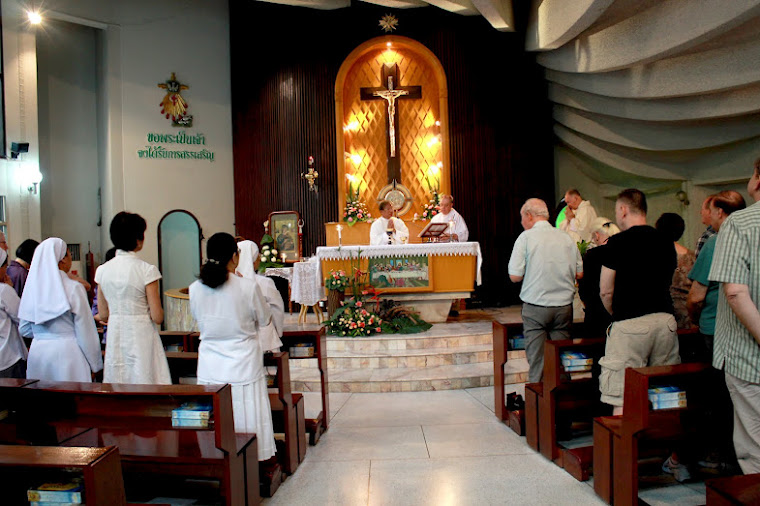
We gather

We gather
to give thanks for my 25 years.

Sunday, August 31, 2025

Is our world crazy or deranged?

Alexander the Great

In the past week, I was overcome, left speechless, as I read the story of the shooting at a Catholic church, in Minneapolis.  While a parish school was inside at mass, the shooter locked the church door from outside.  He then proceeded to shoot indiscriminately, through the windows, killing and injuring children at mass.  I found that incomprehensible.  How could any human being act in such a way towards other human beings?  

Then, I stood back and thought - "Human beings are doing this stuff all the time, just not in a Catholic church in the USA.  Human beings are violating each other all too often, in such shameful and hateful ways.  Look at Gaza, Iraq, Sudan, Myanmar.  The list just unravels. It is all mind-blowing what we can do to each other."  

As that story stayed with me, the word that came to me was "deranged".  It is a word I never use.  Yet, it now, aptly described for me an action that haunted me, as it was not just an insane or deplorable act.  Much more, this tragedy has unfolded due to deranged, human behaviour.  This is not to judge a person.  Rather it arises from my grappling with how any human being could commit such a callous act.    

How can this happen?  I keep saying that.  Maybe, in a world that is more deranged than crazy, we can learn from true warriors of history, like Alexander the Great, about valour and honour, both surviving above all deranged behaviour.    

Alexander the Great (356–323 BC) built an empire of nearly 2 million square miles.  Yet he died at just 32.  Legend says that he gave the following orders for his funeral.

1) Physicians to carry his coffin – showing that no one can escape death, not even with the best doctors.  
2)  Gold and treasures scattered on the road – showing wealth cannot follow us.  
3)  His hands left empty outside the coffin – showing we come and go with nothing.  

Many people ignore God, justice, humanity, and righteousness and follow evil ways to possess power and possessions.  But we cannot take power, fame, or riches beyond life. What truly matters is the good and bad we do while alive.
 As Scripture reminds us: 
 “For what will it profit a man if he gains the whole world, yet forfeits his soul?”  (Mark 8:36)  
(Johnson of Myanmar, thanks for this insight) 

Here, we can see that, even in the history of war, valour and honour rise out of the ashes, above all inhumanity.  Our world may appear deranged, but hope always lives and peace ever remains possible, rising just as well out of the depths of despair and against all odds.  We just need to keep our eye on the good of all, the good of the planet, never losing sight that we are already in the city of the living God (Heb, 12).  We are here.  We are here for life, a good life, a life shared.  This is truly a good place to be, as it is ordained for us, by the God of the living.  It is our mission to act so that our world never become deranged.     
 

Sunday, August 24, 2025

Ecological Economics


This week, I am using a fancy title.  It comes from my participating this past week in a webinar, on Laudato Si and ecological economics.  Fancy title but it is dealing with nitty gritty, hot issues, facing our planet and humanity.  The presenter of the webinar told us that his take-away word, for us, would be heat.  By this, he was saying that the bottom line is that it is all about how hot our planet is.  Then, on Friday, I saw the news - UN officially declares famine in Gaza.  Do we understand how hot it is really getting on our planet?    

A hot issue demands attention, and demands it now.  Do we get that?  There is so much needless, unwanted and inhuman suffering in our world that calls for urgent action, but where is our sense of urgency?  The Gaza famine and other such tragedies facing humanity demand we step out now of our sense of indifference, comfort and isolationism (ICI).  

Our world is so chaotic, so full of death and destruction, that we may feel overcome by it, losing our sense of control.  I identify with that.  A sign of this is I often turn off the news, thinking - this is just gut wrenching, but what can I do?  However, if we stay in that ICI cocoon, we only become complicit in the evil attacking our world and the reality becomes worse.  Such is the nature of evil.    

The truth is we live in a harsh reality.  We can neither deny that nor escape from it.  It is in this context, we live our shared humanity, striving to be decent human beings, living good lives.  The challenge in faith is to stand up now, step out of our comfortable lives and live out the gospel, practising that love we so easily proclaim by word of mouth.    

This week, I have a fancy title.  Big deal!   Beyond that, it is a full-on, 'hands on', hard saying.  Get out of our ICI cocoon, live in reality, act in the midst of the harshness of life and love until the end.  Thus we embrace life and God, and his ways.    


Sunday, August 17, 2025

We are on the way

Mary, our Mother, shows us the way


Ayutthaya is a special place in Thailand, as it was the centre of the Siam Kingdom, before Bangkok, and thus it became the cradle of Christianity in Thailand and beyond.  The latter all started with the coming of the Portuguese in the 16th century.  Within what was the Portuguese Village there, where an active community of Portuguese had lived for over 200 years, there now stands a statue of Our Lady, a sign of faith.  

With the fall of Ayutthaya to the Burmese, in 1767, this settlement ceased to exist, becoming today an archeological site.  The Portuguese had come to then Siam for trade and commerce.  As a Catholic community in need of pastoral care, first the Dominicans arrived, then the Franciscans and much later the Jesuits followed.  The Dominican church site now remains as a focus for tourism and pilgrimage.  


Today, its cemetery gives witness to what was in Ayutthaya - an active Portuguese, Catholic community.  This is the birthplace of the Church, not just in Thailand, but also beyond into Vietnam and southern China.  


It is to Ayutthaya,  that 80 of us from the 10am mass community, at Assumption Cathedral, went on pilgrimage.  As pilgrims, we shared a special day, a special experience.  All ages, all shapes and sizes, from our many different backgrounds, together we journeyed.  We were happy pilgrims, needy pilgrims, simple pilgrims, but we all shared one purpose - to consecrate a day to our common search for the sacred.  

We had chosen to go to holy ground, with its history of church and adventure.  There we discovered and we learnt.  There we prayed and we celebrated eucharist.  There we shared bread and we enjoyed.   We returned home better for the experience, enlivened and nourished in body and soul.  What was the source of our personal enrichment?  Simply, we had experienced together the sacred in history and in our present as church.  So our eyes were opened wider by discovery and so we learnt: 
-more than happy, we are joyful, being satisfied by our faith;
-more than needy, we are not alone, being accompanied by God; 
-more than simple, we are humble, knowing our strength is in God with us .  

 Truly, we are pilgrims of hope, ever on the way.  

Sunday, August 10, 2025

We have always lived in the New Abnormal.


The tale of the kamikaze pilot is a gruesome and chilling story, arising out of the death throes of a doomed Japanese empire, at the end of World War II.  Its history portrayed by Hollywood war movies tells the story in fiery, gorish and glamorous ways.  Reality, as usual, is much more complex.  

These pilots were not hateful fanatics, self-consumed in inhuman and evil ways.  Rather research shows they were young and intelligent, men of good standing, who were nabbed by an evil system that was focused on waging war at all costs, until the end - even conscripting good men to fly suicide missions.  

These young pilots were unknowingly caught in the web of a system which was all-consuming, driven by the interests of a militaristic, nationalistic, self-consumed elite.  They did not see themselves as heroes dying for the glory and protection of an empire.  As they became aware of their fate, they referred to themselves as being driven to be murdered, murdered by their own leadership, a fanatical leadership who held all power.  

This was not normal.  This was abnormal.  Heard this before?  

These days, we are always talking of the new normal, now the new abnormal, as if this is the first time in history.  Wrong!   The new abnormal has always been with us, arising strikingly at different times in history - World War I, World War II, the list continues.  We do not live in such a unique or unusual time.  However, we do live in a specific time when we are being overcome by the abnormal.  

This is leading us somewhere - not to the end of time but to great shifts in time.  A change of epoch in history?  We do not know.  We just know that humanity has come this way before.  Instead of throwing up our arms in desperation, it may be time to read history and learn from it.  It may be time to read the true story of the kamikaze pilots, the tokkatai, who realised how stupid was their lot in life.  But what to do?  Sound familiar?     


Sunday, August 3, 2025

We do more than survive


From a distance, during this past week, I have found myself caught up in the excitement and passion surrounding the gathering of the world's youth, in Rome, for this Jubilee Year.   I was totally captured, seduced by the mere image of one million youth, descending upon Rome, for thier Jubilee celebrations.  I found that just utterly mind-blowing, overcoming my imgaination, beyond my capacity for comprehension. I was enraptured with the Wow of Youth and Leo together, during this past week.  Here was the real news story for our world.  

Yet, I am also very aware that in this coming week, we remember 80 years since the dropping of the atomic bombs on Hiroshima and Nagasaki.  It is in my remembering that I find a message for life, shared by valiant and gracious survivors of the atomic blasts, passed on by their families.   I heard their meassge loud and clear, through a heartfelt documentary, on Deutsche Welle - 8.15 Hiroshima - from father to daughter.  Shinji was a teenager in Hiroshima when the bomb fell.  His father led him out of death, finding help, with both surviving, while suffering terribly.  

Despite the ultimate loss of his father and his family, Shinji, who lived a long life, had an enigmatic message to bequeath to the world.  It goes thus. 
Don't be blinded by anger.  
Forgive and live in peace. 
If you receive kindness, share it with others.  
In the midst of immense suffering, he learnt this from his father.  What his father gave him through words and love in action, Shinji treasured.  
Words do matter.  Words give life.  Do not underestimate the power of the word, word lived in life.  

In the words of Pope Leo, in this past week, to the gathered and enthused youth: 
"Peace needs to be sought, proclaimed and shared everywhere, both in the places where we see the tragedy of war and in the empty hearts of those who have lost the meaning of life.  ...  It is about creating an encounter of hearts."  

I don't believe it is any accident that the first atomic bomb was dropped on the Feast of the Transfiguration of the Lord, when Jesus shone in "dazzling white" and his face "changed in appearance".  The light was blinding but, from it, a new reality shone forth.  
.